

Ring Setting Guide: 10 Styles Every Bride Should Know
Ring Setting Guide.
Ten engagement ring settings every bride should know — from timeless solitaires to intricate designs that bring a completely different personality to the same center stone.
One center stone. A world of settings.
The setting does more than hold a gemstone in place. It influences the ring's appearance, protection, profile and overall character.
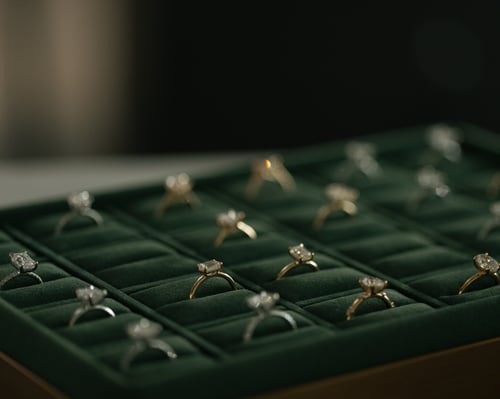
The setting changes everything.
Two engagement rings can feature similar center stones and still look completely different. The difference often comes down to the setting — the structure that holds the stone and defines how the ring looks on the hand.
Some settings keep the focus entirely on the center stone. Others add sparkle along the band, create a vintage-inspired appearance or introduce a hidden detail. Understanding the options makes it easier to find a ring that suits your taste and everyday routine.
Ten settings.
Ten personalities.
Explore the defining feature of each setting and consider how it changes the look, feel and practical details of an engagement ring.
Prong Setting
Small metal prongs secure the center stone while leaving much of it exposed to light. A versatile choice for many classic and modern designs.
↗Bezel Setting
A metal rim surrounds the stone's edge, creating a clean, contemporary outline and a more protected profile.
↗Halo Setting
A circle of smaller stones frames the center, adding detail and creating a more elaborate overall appearance.
↗Hidden Halo
Small accent stones sit beneath the center stone, adding a subtle sparkle that is especially visible from certain angles.
↗Pavé Setting
Tiny stones are set closely along the band to create a continuous line of sparkle beside the center stone.
↗Channel Setting
Accent stones sit within a channel formed by metal rails, giving the band a neat, streamlined finish.
↗Cathedral Setting
The shoulders of the band rise toward the center stone, creating an elevated profile inspired by architectural arches.
↗Three-Stone Setting
Two side stones accompany the center stone, creating a balanced design with additional detail across the finger.
↗Split-Shank Setting
The band divides into two sections as it approaches the center, adding openness and a distinctive silhouette.
↗Tension-Style Setting
The stone appears held between opposing ends of the band. This striking look requires carefully engineered construction.
↗What matters beyond the sparkle?
The most beautiful setting is one that balances your design preferences with comfort, stone security and the way you plan to wear your ring.
Stone Protection
Think about the stone's shape and whether its edges or pointed tips need extra protection. Ask how the setting secures the stone and what maintenance it may require.
Everyday Comfort
Consider the height of the setting, the band profile and whether raised details may catch on clothing or gloves during your usual activities.
Maintenance
Settings with small accent stones may need periodic checks and cleaning. Ask a qualified jeweler about inspection frequency and care for your specific design.
Wedding Band Fit
If you plan to wear a wedding band beside your engagement ring, check how the two profiles sit together. Some settings may leave a gap or need a shaped band.
Four questions to ask before buying.
Use these questions when comparing ring settings or discussing a design with your jeweler.
Does the setting suit my lifestyle?
Think about work, hobbies, comfort and how often you expect to wear the ring.
Is the center stone secure?
Ask about the setting construction, prongs or other stone-retention features and regular inspections.
Will it sit well with my wedding band?
Try the rings together or confirm compatibility before finalizing your purchase.
Does the design feel like me?
Consider whether you prefer understated, detailed, vintage-inspired or modern jewelry.
Setting questions.
Quick answers to common questions about engagement ring settings and choosing the right design.


